
If a Technology Doesn’t Free Up Time for What Matters, You Don’t Need It
AI won’t fulfill your mission. More time for curating, welcoming, and storytelling will.

I think about how often a cultural team adopts a new tool and six months later has more work than before, not less. A CMS to populate, a management system to feed, a social channel to maintain. The promise was “it will simplify your life”. The reality is one more tab open in the browser and one more procedure to follow.
With AI, the same thing is happening. Only faster.
The focus we’re losing
Last month I facilitated an AI workshop with a group of professionals. I didn’t talk about prompts, language models, or which tool is better than the others. I put one question at the center: what problems do you already have today that nobody is solving?
The discussion was lively, but that question forced everyone to think differently. Because the truth is that the rush toward “being more productive with AI” is making us lose sight of a more important question: productive to do what?
For a software company like mine, the answer is simple: solve problems for clients and make money. For a cultural organization, the mission is broader and more delicate. A museum exists to preserve, to tell stories, to welcome. A theatre exists to create live experiences that stay with you. A festival exists to build moments of belonging.
None of these missions are fulfilled by “being more productive.” They are fulfilled by having more time for the things that matter.
Think of AI as new team members, not as software
Reflecting on that workshop, there’s a shift in perspective I want to propose.
When you bring a new person into your team, you don’t put them to work independently right away. First you help them understand how the group works, what the dynamics are, who does what. Then you teach them the processes. Integration first, training second.
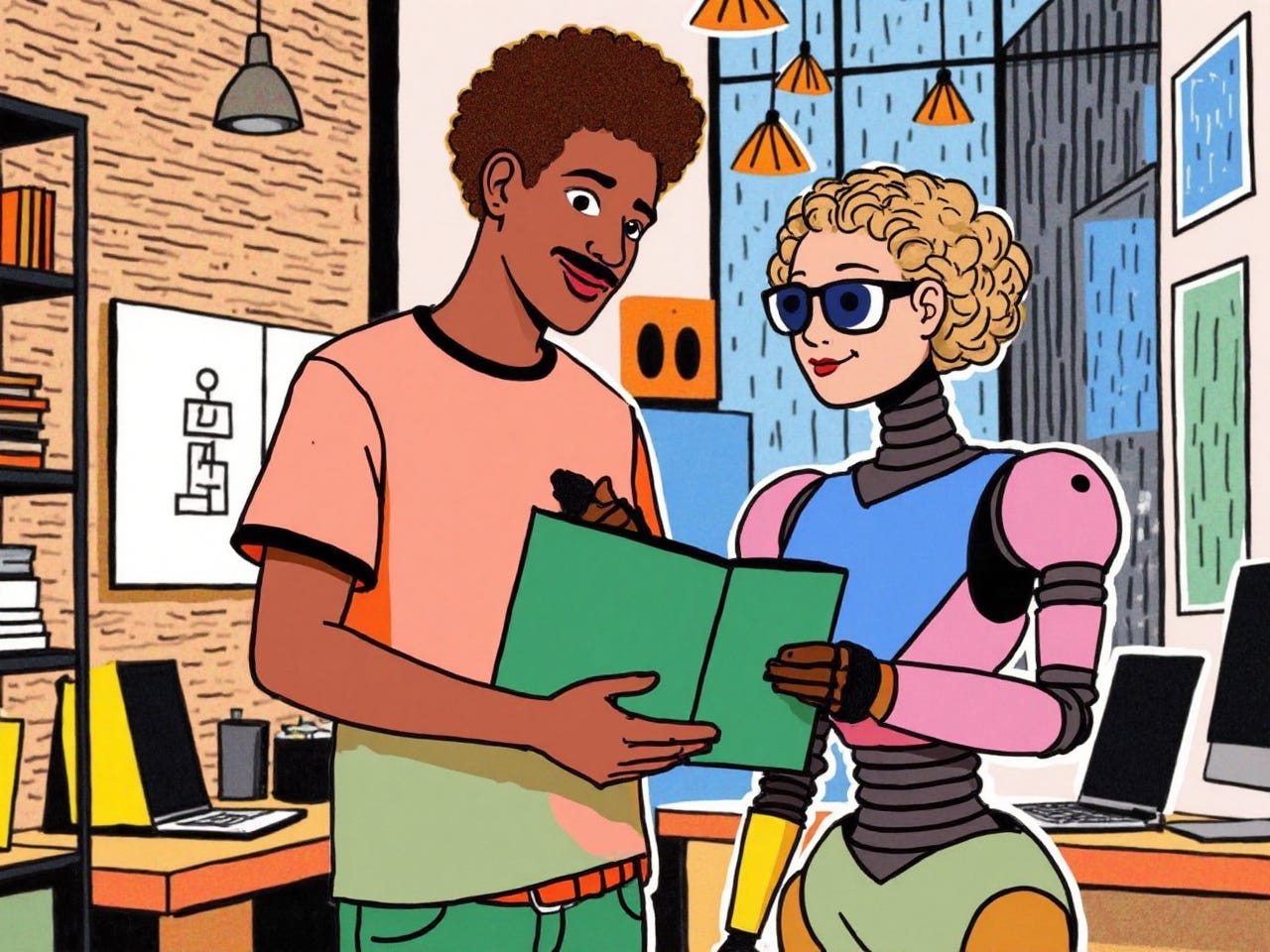
AI should work the same way. Think of it as a handful of competent, fast people you need to bring into your organization. Not as software to install. This lets you think more clearly about where they can actually help and where they would only create confusion.
And like any new team member, there will be some distrust. That’s natural. A curator who has spent years developing their own narrative voice won’t welcome with open arms a tool that “writes for them.” And they’re right to want control over that process, because a museum’s voice is built on years of curatorial judgment. It’s not something you hand off entirely and hope for the best.
But wanting control doesn’t mean doing everything yourself. AI shouldn’t sideline the curator. It should work under their direction, handling the heavy lifting so they can focus on the decisions that actually shape the visitor’s experience.
Where it can actually help you
Think about the curator who spends three hours translating exhibition texts for a temporary show into three languages. That time could go toward meeting the artists, studying the context, improving the exhibition layout. Or think about the marketing manager at a theatre who every Monday morning manually compiles the same report on last week’s ticket sales. Those two hours could become two hours of real analysis on what’s working and what’s not in how they communicate with their audience.
I’m not telling you to “use AI for everything”. I’m telling you: look at your daily work and ask yourself where time gets absorbed by repetitive tasks that don’t require your professional judgment. Translations to review, data to organize, information to search for, routine communications to prepare.
If you don’t have someone in-house with the skills to map where AI can make a difference, find that person externally. Explain your process pain points and work together to figure out where AI can fit in without disrupting what already works.
The real measure
The time a technology frees up has value only if you know where to reinvest it. For those who work in culture, the important things are those no technology will ever do in your place:
Standing in front of visitors and understanding what they feel.
Solving the problems that only surface when you’re present.
Welcoming people in a way that makes them feel they belong.
Studying, staying current, cultivating the expertise that makes your work unique.
If your new AI tool isn’t giving you more time for these things, think again. Maybe it’s not the right tool, maybe you’re not using it the right way, or maybe you didn’t need it at all.
The best technology is the one that makes you forget you have it. Because it already gave you back the time to do what truly matters.